

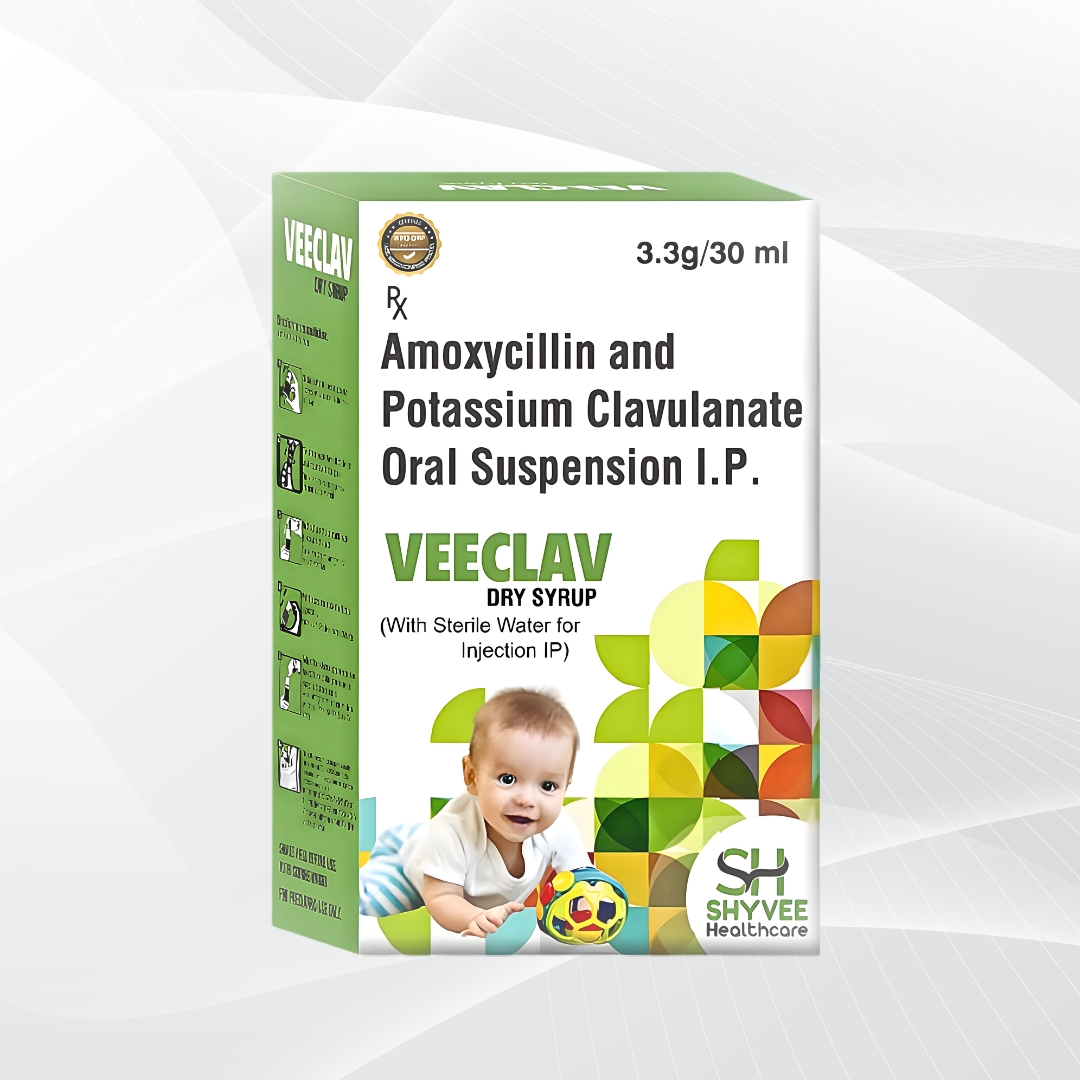
VEECLAV Dry Syrup (Amoxycillin and Potassium Clavulanate): Complete Guide for Parents
By shyvee healthcare
“Disclaimer: The information in this blog is for educational purposes only and not a substitute for professional medical advice. Always consult your doctor before starting any medication”
When children suffer from bacterial infections, paediatricians often prescribe a trusted antibiotic combination like VEECLAV Dry Syrup. This medication contains Amoxycillin and Potassium Clavulanate Oral Suspension I.P., a powerful combination that effectively treats various infections in children.
In this guide, we will explain everything about VEECLAV Dry Syrup, including its composition, uses, dosage, benefits, side effects, precautions, and storage instructions.
➤What is VEECLAV Dry Syrup?
VEECLAV Dry Syrup is a pediatric antibiotic formulation available in dry powder form that must be mixed with water before use. It contains:
- Amoxycillin – A penicillin-type antibiotic that kills bacteria.
- Potassium Clavulanate – A beta-lactamase inhibitor that enhances the effect of Amoxycillin.
This combination makes the medicine more effective against bacteria that may resist regular antibiotics. It is commonly prescribed for children to treat mild to moderate bacterial infections.
➤Composition and Strength
VEECLAV Dry Syrup comes in a strength of 3.3g/30 ml after reconstitution.
Active Ingredients:
- Amoxycillin
- Potassium Clavulanate
This combination ensures broad-spectrum antibacterial coverage and improves treatment success.
➤How Does VEECLAV Dry Syrup Work?
VEECLAV works through a dual-action mechanism:
• Amoxycillin Action
Amoxycillin destroys bacteria by interfering with their cell wall formation. Without a proper cell wall, bacteria cannot survive.
• Clavulanate Action
Some bacteria produce enzymes called beta-lactamases that can inactivate antibiotics. Potassium Clavulanate blocks these enzymes, allowing Amoxycillin to work effectively.
Together, they provide stronger protection against resistant bacteria.
➤Uses of VEECLAV Dry Syrup
Doctors prescribe VEECLAV Dry Syrup to treat several bacterial infections in children, including:
- Ear Infections (Otitis Media)
Helps reduce pain, swelling, and infection in the middle ear.
- Throat Infections
Treats tonsillitis and pharyngitis caused by bacteria.
- Sinus Infections
Relieves sinus congestion and bacterial inflammation.
- Chest Infections
Used for bronchitis and pneumonia in children.
- Skin and Soft Tissue Infections
Treats infected wounds, boils, or skin abscesses.
- Urinary Tract Infections (UTIs)
Helps eliminate bacteria from the urinary system.
⚠ Important: VEECLAV is effective only for bacterial infections, not viral infections like cold or flu.
➤Dosage of VEECLAV Dry Syrup
The dosage of VEECLAV Dry Syrup depends on:
- Child’s age
- Body weight
- Severity of infection
- Doctor’s prescription
➤General Dosage Guidelines:
- Always follow the paediatrician’s instructions.
- Shake the bottle well before each dose.
- Use a measuring spoon or oral syringe for accurate dosing.
- Complete the full course of antibiotics.
Never stop the medicine early, even if the child feels better.
➤Possible Side Effects of VEECLAV Dry Syrup
Like all antibiotics, VEECLAV may cause mild side effects.
Common Side Effects:
- Nausea
- Vomiting
- Diarrhea
- Stomach discomfort
- Mild skin rash
Serious Side Effects (Rare):
- Severe allergic reaction
- Swelling of the face or lips
- Difficulty breathing
- Severe diarrhea
If serious symptoms occur, seek immediate medical help.
➤Precautions and Warnings
Before giving VEECLAV Dry Syrup, inform your doctor if your child:
- Is allergic to penicillin or other antibiotics
- Has liver problems
- Has kidney disease
- Has a history of antibiotic-related diarrhoea
Avoid self-medication. Improper use can lead to antibiotic resistance.
➤Final Conclusion
VEECLAV Dry Syrup (Amoxycillin and Potassium Clavulanate Oral Suspension I.P.) is a reliable and effective antibiotic for treating bacterial infections in children. Its dual-action formula ensures stronger bacterial control and faster recovery.
However, it should always be used under medical supervision to ensure safety and effectiveness.